

Running Injury Treatment in Bristol | Osteopath for Runners
Bristol is one of the most active running cities in the UK. From the Downs and Ashton Court to the Bristol Half Marathon and the countless parkruns across the city, thousands of people in Bristol run regularly. And where there are runners, there are running injuries.
At Move Easy Osteopathy in Bristol, we treat a high volume of running-related injuries. We understand how runners think, how much running means to you, and how frustrating it is to be told to simply stop and rest. Our goal is to get you back running as quickly as possible, with the strength and movement quality to stay there.
Fully Registered and Insured
For Your Safety
EXCELLENTTrustindex verifies that the original source of the review is Google. Dom has been great at helping to relieve my neck pain and headaches. After only a few sessions, my headaches have stopped. He listened to what I wanted or didn't want as part of my treatment and made me feel comfortable.Posted on GoogleTrustindex verifies that the original source of the review is Google. Had recurrent hamstring and lower muscle injuries for years as a rugby player working a desk job. Dom pointed out several factors that were causing the injuries I wasn’t aware of and his treatment has loosened up my entire posterior chain. Have been able to play with much lower rate of reoccurrence and at a higher level when I thought I was needing to retire at 27. Just finished an entire season injury free at 30.Posted on GoogleTrustindex verifies that the original source of the review is Google. Great professional service, very knowledgeable. Dom was great and very friendly and helpful. Helped me with my tendon issues and post treatment care.Posted on GoogleTrustindex verifies that the original source of the review is Google. Dominic has been so helpful in keeping me injury free in the lead up to my half marathon! He’s so easy to chat with and seriously knows his stuff! Thank you!!Posted on GoogleTrustindex verifies that the original source of the review is Google. Had a session with Anna and she is excellent. Very kind and a thorough professional! Will highly reccomend to anyone looking for a solution. She is very positive and encouraging as well as non judgemental.Posted on GoogleTrustindex verifies that the original source of the review is Google. I have had many physical issues throughout my life whether it be a knee a hip, a neck or an ankle Dom is the guy. If you have any pain or alignment issues, then I would highly recommend this incredibly skilled man. I trust him 100% with all problems. Please note that he is also an incredible massage therapist and probably one of if not the most intuitive therapists I have ever had the pleasure of seeing, which in my case is literally hundreds. You don’t even have to tell him where that point is that you want him to massage or touch he will find it instantly. He’s incredibly geeky and 100% nerd worthy. He knows his stuff and is clearly an expert. Full of beans and positive energy. Plus, he’s built like a rugby player so no matter what your size he can do the job. You literally won’t get any better service from anyone else. Genuinely how I feel. Thanks Dom.Posted on GoogleTrustindex verifies that the original source of the review is Google. Dom has a brilliant demeanour; approachable, super knowledgeable and calming - this helped so much with understanding of my injury and return timelines. Having injured my shoulder playing rugby, I was struggling to exercise in any capacity, particularly playing rugby. Dom quickly diagnosed the injury and set out a plan for return to exercise. With Dom I was able to return to exercise with confidence and have had no problems since. Being an osteopath, Dom was able to perform manual therapy through dry needling and soft tissue manipulation in each session, which I am sure made a difference.Posted on GoogleTrustindex verifies that the original source of the review is Google. Great experience using Dom, would highly recommendPosted on GoogleTrustindex verifies that the original source of the review is Google. Very helpful and professional!
Common Running Injuries We Treat
Running injuries are almost always the result of a combination of factors: training load, movement quality, strength deficits, and biomechanics. Understanding which factors are driving your injury is what allows us to treat it properly, rather than just managing symptoms. At Move Easy Osteopathy in Bristol, we regularly treat:
Patellofemoral pain syndrome (runner’s knee)
Pain around or behind the kneecap that worsens with running, stairs, and prolonged sitting. One of the most common running injuries we see, typically driven by weakness in the hip abductors and gluteal muscles, combined with poor single-leg control. Responds very well to targeted rehabilitation.
IT band syndrome
A sharp, burning pain on the outside of the knee that comes on at a predictable point during a run. Despite the pain being at the knee, the cause is almost always higher up, in the hip, glute, and the way load is distributed through the lower limb during running. Stretching the IT band alone does not fix this.
Achilles tendinopathy
Pain and stiffness in the Achilles tendon, typically worst first thing in the morning and at the start of a run. Achilles tendinopathy is a load management problem and responds well to a structured progressive loading programme. It does not respond well to rest alone, which is one of the most common mistakes runners make with this injury.
Plantar fasciitis
Pain on the underside of the heel, typically worst with the first steps in the morning or after periods of sitting. Plantar fasciitis in runners is usually driven by a combination of calf tightness, poor foot mechanics, and sudden increases in training load. It is very treatable but requires a structured approach.
Shin splints (medial tibial stress syndrome)
Pain along the inner shin that develops during running and can become severe if ignored. Common in newer runners and those who have increased their mileage too quickly. Early treatment is important to prevent progression to a stress fracture.
Hip flexor and groin strain
Pain at the front of the hip and groin, often worsening with lifting the knee and accelerating. Common in faster runners and those doing speed or hill work. Frequently undertreated because it is mistaken for a simple muscle strain.
Stress fractures
Stress fractures are overuse injuries caused by repetitive loading on bone, most commonly affecting the tibia, metatarsals, and navicular in runners. They require urgent assessment and imaging. If we suspect a stress fracture, we will refer you promptly.
Gluteal tendinopathy and greater trochanteric pain syndrome
Lateral hip pain that worsens with running, particularly on cambers and hills. Driven by gluteal tendon dysfunction and responds well to a progressive loading rehabilitation programme. Often misdiagnosed as bursitis.
Lower back pain in runners
Lower back pain is more common in runners than many people realise, particularly those with tight hip flexors, weak glutes, and poor running posture. We assess the whole kinetic chain and address the underlying cause rather than just the painful area.
Accurate Diagnosis
Through a detailed case history and accurate examination, we establish you a thorough diagnosis.
Expert Treatment
Tailored hands-on treatment helps the root cause of your issue, providing pain relief and improved function.
Bespoke Rehabilitation
Lifestyle advice and exercise prescription improves mobility and strength and gets long-lasting results.
Effective running injury treatment for pain relief and lasting results using Osteopathy in Bristol
Why Do Running Injuries Happen?
Most running injuries are not bad luck. They have identifiable causes, and understanding those causes is what allows us to treat the injury and prevent it from coming back.
The most common contributing factors we identify in Bristol runners are:


Too much too soon The most common cause of running injury. Increasing mileage, intensity, or frequency too quickly gives the body insufficient time to adapt. This is particularly common after a period of reduced running, returning from a previous injury, or building toward a race.
Weakness in key muscle groups Hip abductor and gluteal weakness is found in the majority of runners with lower limb injuries. When these muscles are unable to control the pelvis and femur during single-leg loading, the knee, ankle, and foot all absorb excessive and abnormal forces. Identifying and addressing this weakness is central to our rehabilitation approach.
Poor running mechanics Overstriding, excessive forward lean, poor arm drive, and reduced cadence all alter the way forces are distributed through the body during running. These faults are often invisible to the runner but clearly visible on assessment. Small changes in running technique can make a significant difference to injury risk.
Inadequate recovery Sleep, nutrition, and rest days are as important as the running itself. Runners who are under-recovered are at significantly higher risk of overuse injury.
Previous injury An old ankle sprain, knee injury, or back problem that was never fully rehabilitated is one of the most reliable predictors of future running injury. Addressing residual dysfunction from previous injuries is an important part of keeping runners healthy long-term.
Running Injuries in Bristol Treatment
How We Treat Running Injuries
At Move Easy Osteopathy in Bristol, we take a whole-body approach to running injury assessment and treatment. We do not just treat the painful area. We find out why it is painful, address the cause, and give you the tools to stay running well.

Hands-on Treatment
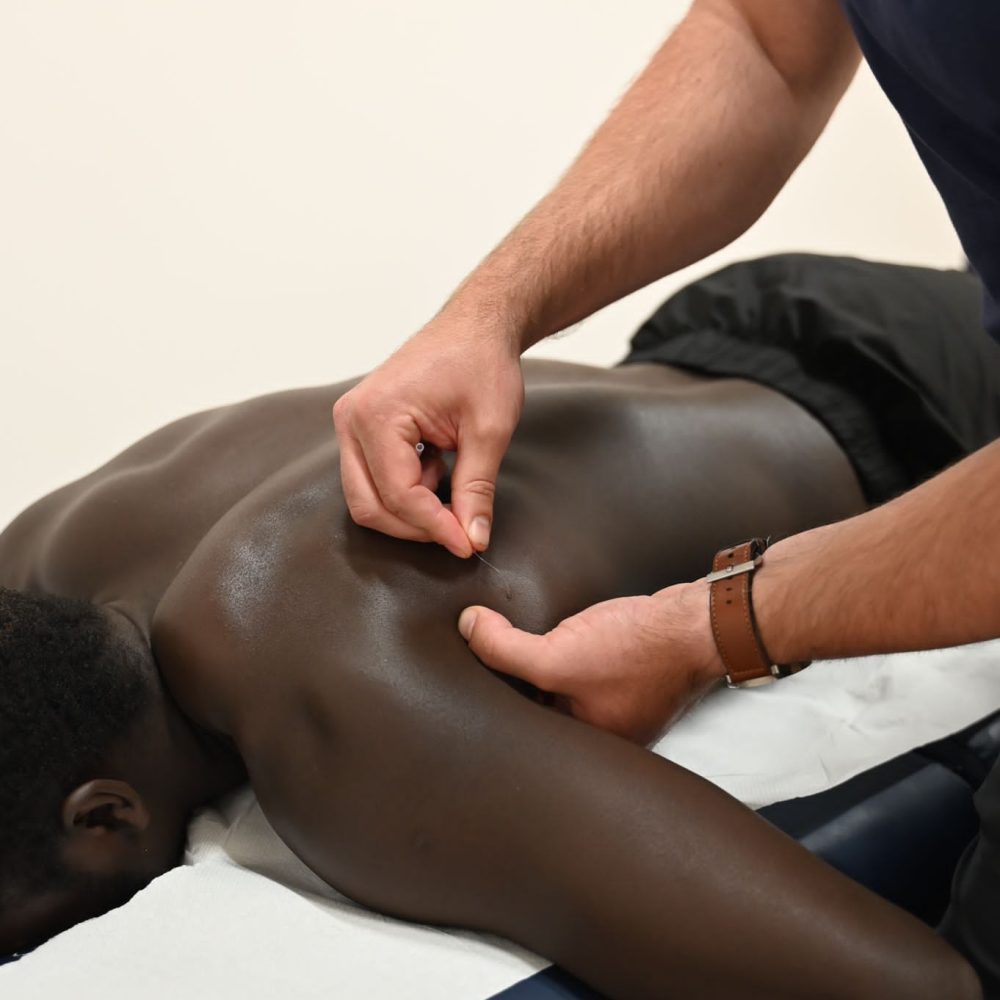
Joint mobilisation, manipulation, soft tissue treatment, and medical acupuncture to reduce pain, restore movement, and prepare the body for rehabilitation. We treat the full kinetic chain, not just the site of pain.

Soft tissue treatment and Medical Acupuncture
targeted deep soft tissue work on the hip flexors, gluteal muscles, iliotibial band, calves, quads, hamstrings and surrounding structures to reduce tension, improve circulation, and restore normal movement patterns.
Running technique advice
Where technique is contributing to your injury, we give you specific, practical cues to improve your running mechanics. We keep it simple and focus on the changes that will make the most difference.

Running and movement assessment
We watch you run. We assess your single-leg squat, your hip stability, your ankle mobility, and your movement quality. This tells us far more than a static examination alone and allows us to identify the specific factors driving your injury.

Progressive rehabilitation
Using our gym space, we design a structured rehabilitation programme that addresses the specific weaknesses and movement faults contributing to your injury. We progress this systematically so that you return to running with a body that is stronger and more resilient than before the injury.

Load management and return to running plan
We give you a clear, structured plan for managing your training load during recovery and returning to running progressively. We do not tell you to stop running unless it is genuinely necessary. In most cases, we modify your training rather than stopping it entirely.
Who We See for Running Injuries in Bristol
We see runners of all abilities at our Bristol clinic. Parkrun regulars from Clifton, Redland, and Eastville whose knees or Achilles have broken down under consistent weekly mileage. Bristol Half Marathon runners from Cotham and Whiteladies Road building toward race day. Trail runners from Westbury Park and Stokes Croft whose hips and ankles have taken a battering on the Ashton Court trails. Ultra runners dealing with complex, multi-site injuries. Complete beginners who have done too much too soon and need help getting back on track without losing their motivation.
Whatever your level and whatever your injury, we have the skills and the space to help you run again.
Whatever your hip problem and whatever your goal, we have the experience and the space to help you recover properly and stay active longer.
“When it comes to helping your running injuries in Bristol, I’ll listen to every aspect of what matters to you so that I understand your pain as well as you do so we can tackle it together.”
Anna Stevens – Osteopath
“Osteopathy is the perfect mix of scientific evidence-based management and holistic treatments. I aim to achieve your goals, whatever they may be. We help your Running Injuries in Bristol using multiple treatments”
Dominic Alcock – Osteopath & Founder of Move Easy
What to Expect at Your First Appointment
Your first appointment at our Bristol running injury clinic will include: At your first appointment at our Bristol clinic:
1. A detailed history of your injury, your training, and your running history
2. A thorough physical assessment of the injured area and the full kinetic chain, including the foot and ankle, knee, hip, pelvis and lower back
3. A movement assessment including running observation, single-leg squat, and relevant functional tests
4. We’ll give you a clear diagnosis, a realistic treatment plan, and an honest estimate of how many sessions you’re likely to need
5. Hands-on treatment in your first session and a detailed rehab plan
We understand that telling a runner to stop running is rarely the right answer. We work with your training, not against it. Only when necessary will we advise you to stop, but even then we’ll try to find ways to keep you active.
If we feel imaging, an X-ray or MRI, would help confirm the diagnosis or guide treatment, we’ll advise you on how to access that through NHS or private routes.
Why Choose Move Easy Osteopathy Bristol?
– Evidence-based and personalised rehab and recovery plans
– Expert hands-on treatment
– Friendly, patient-centred approach
– Convenient Bristol location
– Focus on long-term results, not quick fixes
Frequently Asked Questions About Running Injuries
Do I need to stop running while I’m being treated?
Not necessarily. In most cases we modify your training rather than stopping it entirely. Complete rest is rarely the best approach for running injuries and often leads to deconditioning that makes return to running harder. We will give you clear guidance on what is safe to do during your recovery.
Can an osteopath help with running injuries?
Yes. Osteopaths are well placed to assess and treat running injuries because we take a whole-body approach. We look at how the entire kinetic chain is functioning, not just the painful area, which means we identify causes rather than just treating symptoms.
How many sessions will I need?
It depends on the injury and how long you have had it. Acute soft tissue injuries often respond well within 4-6 sessions. Tendinopathies and longer-standing overuse injuries typically require a longer course of treatment and a structured rehabilitation programme. We will give you a realistic indication at your first appointment.
I’ve been told to just rest. Will that fix my running injury?
For some injuries, relative rest is an important part of recovery. But for most running injuries, rest alone does not fix the underlying cause. It reduces pain while you are not running, but the weakness, movement fault, or load management issue that caused the injury is still there when you return. That is why so many running injuries recur. Addressing the cause is what prevents that.
Can you help me improve my running technique?
Yes. Where running technique is contributing to your injury, we will give you specific, practical advice on how to improve it. We keep technique changes simple and prioritise the adjustments most likely to reduce your injury risk.
Do I need a GP referral?
No. You can book directly with us. If we identify anything that requires further investigation or onward referral, we will advise you at your appointment.
How quickly can I get an appointment in Bristol?
We aim to offer appointments within a few days. Book online or call us and we will get you in as soon as possible.
Book Your Running Injury Appointment in Bristol
If you are dealing with a running injury in Bristol and want to get back to running as quickly and safely as possible, book an appointment at Move Easy Osteopathy today.
Book online or call us on 07494 971817. We will get you in quickly and start working on getting you back to what you love.
