Osteopathy For Sciatica

Share Post:

osteopathy for sciatica-can it help?

As discussed in previous posts, there are many causes of sciatica but having a disc injury is the most common. The treatment options are varied, but osteopathy for sciatica can be extremely beneficial!

The diagnosis is made from a thorough case-history and physical examination. Osteopaths are highly trained in recognising what is and what isn’t sciatica. 

Osteopaths use a mixture of lifestyle advice, hands-on treatment and specific rehabilitation exercises to treat patients in pain. Osteopathy for sciatica is much the same and is tailored to the individual patient. As an osteopath, myself, I have seen hundreds of cases of sciatica from onset of symptoms all the way through to full recovery (symptom free and fully returned to every day activities). 

This blog is for the initial management of sciatica. As you improve, the management changes as you go through different stages. Osteopathy for sciatica can help at all stages.

Osteopathy For Sciatica is a Great Way to Reduce Symptoms

The first stage of sciatica treatment

With disc injuries that cause sciatica, there are three things we need to do immediately:

(1) Have a discussion about the level of damage, what is and isn’t going on, put in place a plan, put your mind at ease and answer all your questions.

(2) Put together a rehabilitation plan that keeps you moving, mobile and strong without aggravating your pain. This will be tailored to you and how you present in order to manage symptoms and improve function. 

(3) Perform hands-on treatment in order to desensitize your pain, provide pain relief and improve your range of motion. 

What are the rehabilitation exercises?

Here are some common exercises that I prescribe for sciatica. Please bare in mind these aren’t for everyone and the prescription (reps/sets) is tailored to the individual!

I would highly recommend consulting a professional BEFORE trying these exercises.

And STOP if they are painful to do or aggravate your symptoms!

 Here are some of my favourites:

1) simple movements in the style of yoga or pilates

(1) Prone extensions. Lie on your front with your hands either side of your shoulders and gently push upwards so you arch back. Don’t take to the point of pain, just to discomfort. Repeat for as long as it is comfortable.

(2) Cat-Camel. On all fours, keep your arms straight with your hands under shoulders and knees under hips. Gentle look up with your neck and sink down with your back. Stay within your comfortable range. Then bring your chin to your chest and arch your back upwards like a dome. Stay within your comfortable range. Repeat for as long as is comfortable.

(3) Child’s pose. On your knees, sink your bottom backwards towards your heels and reach forwards with your hands in front of you. Feel the stretch in your back or into your backside. Don’t take it too far so it hurts. Hold for a few seconds, come back up to your hands and knees then repeat as long as is comfortable.

2) Little repeated movements to activate muscles

These are just little movements to get moving, provide some pain relief and activate to muscles to improve confidence.

(1) Lie on your back with your knee bent up, feet flat on the floor and knees/feet together. Keep your shoulder down and gently rock your knees from side to side, slowly, to move the hips and the lower back. Don’t necessarily hold the stretch, but you can if it feels good. Repeat slowly as long as it feels comfortable.

(2) Same starting position but with your feet hip-width apart. From here, very gently and slowly push through the soles of your feet as if to lift your hips up. If that’s painful, then just relax and repeat that contraction. If it isn’t painful then lift your hips up into a ‘bridge’ position. Repeat a few times as long as it’s comfortable.

(3) Sit-to-stand. This is a key one. Stand in front of a chair, facing away from it, contract your tummy and your glutes, and really slowly lower yourself into the chair. Have a second to sit and see how you feel, then stand up with control, trying not to use to much force through your hands but do use them if you need. Repeat a few times if you can!


Osteopathy For Sciatica Involves Movement and Rehabilitation to Help at Home

3) Stretches

These stretches are to be held anywhere from a few seconds to 30 seconds, if you can tolerate them, and repeated if comfortable. If holding a stretch makes your pain worse, don’t do these!

(1) Lying flat on your back, hug one knee up to your chest and pull towards the opposite shoulder. If this hurts the front of your hip, twist your hip outwards so your foot points across towards the other foot. You’re aiming to feel this in the backside of the side you’re stretching.

(2) Lying on your back, hug both knees up to your chest. If it’s pinching in the hips, twist both hips out so your feet point across one another. You’re aiming to feel this across the lower back.

(3) Lying on your back, bring both knees up so feet are flat on the floor. Slowly twist your knees off to one side and feel the stretch on the other side in your lower back or backside. This can be done with your knees at shoulder-width or with your feet together.

4) Neurodynamics/nerve flossing

These are more complicated. Moving the nerve in specific ways can desensitize the nerve and the nervous system, aiding in symptom relief and recovery.

ONLY do these when prescribed by a professional.

We are NOT stretching the nerve. Stretching nerves can aggravate symptoms. Instead, we are ‘flossing’ it so it being moved at both ends together, just like flossing your teeth. The nerve starts in your brain and ends in the bottom of your foot, so is stretched when your chin it to your chest or when your spine is flexed forwards, and also when your leg is stretched. So we are NOT stretching the neck and the leg at the same time.

I’ll only give one, but there are lots of variants.

(1) Slowly transition between position A and B. Don’t take either one to the point of pain, take it just before that so it shouldn’t feel like it’s doing much.

Position A)

Lying on your back, keep your asymptomatic leg straight. Bend your symptomatic leg up, hold on to the back of your thigh (behind the knee) with both hands, let your shin flop over your hands, point your toes upwards, and bring your chin to your chest.

Position B) 

Slowly drop your head back AS you straighten your knee. Keep your hip and hands where they are, keep your toes pointing up.

The only thing that changes is the position of the head and bending the knee.

Keeping Moving is Brilliant for Sciatica

Other initial advice

-Walking little and often is brilliant for symptoms, confidence and overall health if you can tolerate it. Don’t worry if you can’t, it’ll come back.

-Change position regularly. Holding any position for too long (sitting/standing/lying down) can aggravate symptoms and cause stiffness. Changing position every 20-30 minutes can help.

-Ice/heat. The Research behind these is poor. For some people, ice (wrapped in a tea towel and placed on your back for 10 minutes) can help. For others (warm hot water bottle, not directly on the back or leg) can help. For others, neither do. Just find what works for you, if nothing does, then don’t use either.

-Drink 2-3 litres of water every day.

-Eat a healthy diet-lots of fruits, vegetables and lean proteins. AVOID sugary, salty, fatty foods, too much caffeine or alcohol. 

-Talk to your pharmacist or GP about taking pain medications.

-Maintain every day activities as much as you can. Keeping moving, keeping active and living as close to ‘normally’ as you can is great for your sciatica, mental and overall wellbeing.

-Sleep 7-9 hours per night. Just make sure you’re comfortable, it doesn’t matter what position you’re in. Consult a professional if you want advice tailored to you on effective sleeping positions.

osteopathy for sciatica

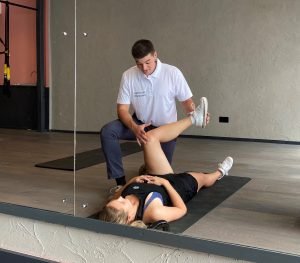
Osteopathy treatment for sciatica is very effective. We look at your body as a whole and look at various areas of pain, tension and restriction. We use massage, stretching, movements and joint manipulation to improve symptoms in your back and down your leg, desensitize your nervous system and give you more confidence in movement.

We DO NOT put discs back into place (the only way of doing that is with a scalpel) and we don’t directly effect the disc or the nerve. We work with your body, joints, muscles and nervous system to improve symptoms.

Want to find out more?

Get in contact or book in online here:


Stay Connected; Start Movin' Easy

Readers who read this, also read these

Sciatica Treatment

Sciatica Treatment is aimed at achieving your goals. We want to get you moving, manage your pain and promote independence.

What Is Sciatica?

Sciatica is irritation or compression of the sciatic nerve, which runs down the back of the thigh into the foot.

Neck Pain North Finchley

Osteopathy is an effective way of treating neck pain in North FInchley to get you back doing what you love.